
If you’re searching for a home loan in Texas (or anywhere else, for that matter), you’ve probably come across the term “rate lock.” It sounds pretty straightforward, but once you’re in the thick of things—touring homes, comparing lenders, and crunching numbers—it can get confusing fast. When’s the right time to lock? What if rates drop? Can you unlock and relock? At Casey Sullivan Mortgage, I’ve seen plenty of folks wrestle with these questions, and I’m here to help you navigate this critical part of the mortgage process with confidence and ease.
What Is a Mortgage Rate Lock?

Let’s start with the basics. A mortgage rate lock is an agreement between you and your lender: they promise to hold your interest rate steady for a specific amount of time, usually from the time you apply for your loan until the day you close. This protects you from sudden rate hikes that could increase your monthly payment or, worse, put your dream home out of reach.
In Texas—where the market can move fast and the weather’s always changing—locking in your rate early can bring serious peace of mind. Rates can fluctuate daily, sometimes even multiple times a day, and the last thing you want is to get caught off guard.
Pro tip: Always ask your lender how long your lock will last and what happens if your closing is delayed. You don’t want any surprises!
When Should You Lock Your Rate?
This is probably the most common question I get, and honestly, there’s no one-size-fits-all answer. The best time to lock depends on a handful of factors: the current rate environment, how far along you are in the homebuying process, and your own risk tolerance.
If you’re under contract and your closing date is set, locking your rate sooner rather than later usually makes sense. It removes uncertainty and lets you budget with confidence. But if you’re still house hunting or your closing is weeks (or months) away, you might want to keep your options open—especially if rates are trending down.
Watch the market, but don’t obsess. Rates move for all sorts of reasons, and even the experts can’t predict every twist and turn. The important thing is to lock when you feel comfortable, not just when it seems perfect on paper.
Pro tip: If you’re worried about missing out on a better rate, ask about “float-down” options. Some lenders offer these as a safety net if rates drop after you’ve locked.
How Long Should You Lock For?
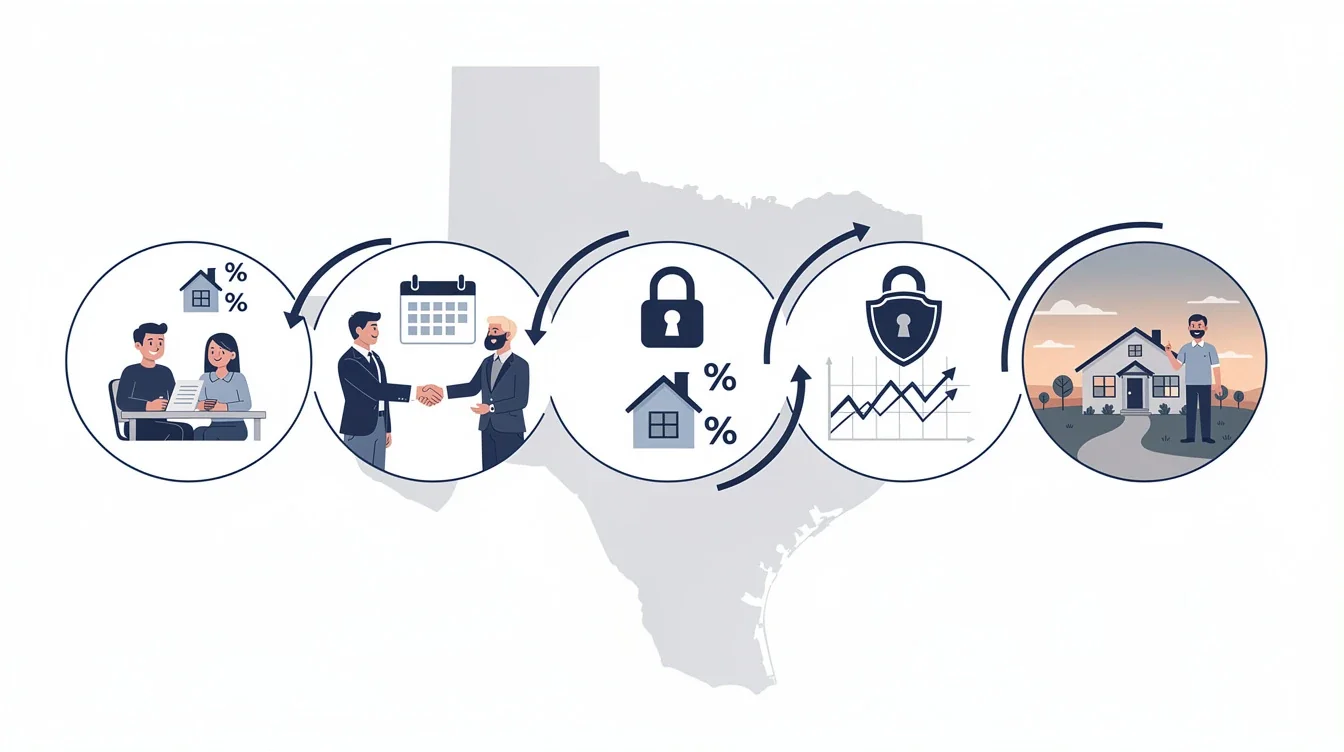
Most lenders, including us at Casey Sullivan Mortgage, offer rate locks in increments like 30, 45, 60, or even 90 days. The length of your lock should match (or slightly exceed) your expected closing timeline.
Shorter locks often come with slightly better rates, but they leave less wiggle room if your closing is delayed. Longer locks protect you for more time, but may come with a small fee or a slightly higher rate. It’s a balancing act: you don’t want to pay for more protection than you need, but you also don’t want your lock to expire before you close.
In Texas, it’s not uncommon for things like appraisal delays or last-minute paperwork to push closings out a few extra days. Build in a little buffer so you’re not scrambling (or paying extra) if the unexpected happens.
Pro tip: If you’re building a new home, ask about extended lock programs. Some lenders offer special long-term locks, sometimes up to 180 days, for new construction.
What If Rates Change After You Lock?
Here’s where things get interesting. Once you lock your rate, you’re protected from increases, but you also give up the chance to snag a lower rate if the market moves in your favor. It’s a tradeoff: peace of mind vs. the potential for savings.
Some lenders (including us!) offer “float-down” provisions that let you take advantage of a lower rate if the market drops significantly after you lock. These usually have specific rules and may come with a small fee, so it’s worth discussing with your loan officer at the start. If you’re not sure, just ask—we’re always happy to walk you through what’s possible.
If your lock expires before you close, you may be able to extend it, but this can cost you. Extensions are usually priced as a percentage of your loan amount, and the longer the extension, the more you’ll pay.
Pro tip: Stay in close touch with your lender during the process. If it looks like your closing might get delayed, talk about your options for extending your lock before it expires—it’s usually cheaper and less stressful that way.
Rate Lock Strategies for Texas Buyers
Every buyer’s situation is different, but there are a few tried-and-true strategies that can help Texans get the most out of their rate lock.
First, don’t wait too long. If rates are rising (as they sometimes do in a hot Texas market), locking early can save you a bundle over the life of your loan. Even a small increase—say, a quarter of a percent—can add up to thousands of dollars.
Second, align your lock with your closing timeline. If you know your closing is set for 45 days out, a 60-day lock offers plenty of cushion. If you’re refinancing and things are moving fast, a 30-day lock might be all you need.
Third, consider your own risk tolerance. Are you the type who’ll lose sleep wondering if rates will drop after you lock? If so, see if your lender offers a float-down, or be prepared to watch the market a little longer before committing.
And finally, work with a lender who communicates clearly and keeps you in the loop. At Casey Sullivan Mortgage, we treat every client like family, walking you through every step and making sure you understand your options—no jargon, no pressure.
Pro tip: If you’re in a bidding war or the seller wants a quick close, a shorter lock can make your offer more attractive. Sellers love certainty, and a smooth, fast closing can set you apart from the competition.
Common Rate Lock Mistakes to Avoid
I’ve seen a lot of buyers make the same mistakes when it comes to rate locks, and most of them are totally avoidable. Here’s what to watch out for:
Waiting too long to lock: If you’re hoping for rates to drop just a little more, you might end up getting burned if they suddenly spike. Timing the market is tough!
Choosing too short a lock period: Closing delays happen, especially in busy Texas markets. Give yourself some breathing room.
Not understanding your lock terms: Every lender has different rules about extensions, float-downs, and lock expiration. Make sure you know what you’re signing up for.
Not communicating with your lender: If anything changes with your closing date or loan details, let your lender know ASAP. Surprises are usually more expensive than a quick phone call.
Focusing only on the rate: The lowest rate isn’t always the best deal if it comes with high fees or difficult terms. Look at the big picture—costs, service, and peace of mind.
Pro tip: Keep a copy of your rate lock agreement handy. If there’s any confusion later, you’ll have all the details in writing.
Conclusion
Navigating mortgage rate locks can feel overwhelming, but it doesn’t have to be. With the right strategy—and the right team in your corner—you can lock in a great rate, breeze through closing, and focus on what really matters: making your new Texas house a home.
At Casey Sullivan Mortgage, we’re all about clear communication, personal service, and making the process as stress-free as possible. Whether you’re a first-time buyer, moving up, investing, or refinancing, we’re here to answer your questions and guide you every step of the way. Ready to talk rate lock strategy? Let’s chat—you’ve got this!