
Life’s biggest moments often come with a hefty price tag—think college tuition, home renovations, unexpected medical bills, or even launching your own business. If you’re a homeowner in Texas, you might be sitting on a powerful financial resource that can help you tackle these expenses: your home’s equity. At Casey Sullivan Mortgage, we’ve helped countless Texans turn their home equity into opportunities, and we’re passionate about making this process clear, simple, and stress-free.
Let’s talk about how you can use your home’s value to fund your dreams or manage life’s curveballs, all while keeping your financial well-being front and center. We’ll walk through what home equity actually is, your options for accessing it, local Texas rules, and the real-life considerations you’ll want to keep in mind.
What is Home Equity, Really?

First things first: home equity is the difference between what your home’s worth and what you still owe on your mortgage. For example, if your home is valued at $400,000 and you owe $250,000, then you’ve got $150,000 in equity. Think of it as a growing piggy bank that you can tap into as you pay down your mortgage and as your property’s value rises.
Home equity can be a powerful tool because it’s money you’ve built up over time—by making monthly payments and by staying put while your home appreciates. Unlike other types of loans or credit, you’re essentially borrowing against an asset you already own.
Pro tip: Your equity grows faster if you make extra mortgage payments or if property values in your neighborhood go up. Even small, additional payments each month can make a big difference over time!
Ways to Tap Into Your Home Equity
So, how do you actually get your hands on that equity when you need it? In Texas, homeowners have a few main options:
-
Home Equity Loan: This is sometimes called a “second mortgage.” You get a lump sum of cash up front and then pay it back in fixed monthly payments over a set period, usually at a fixed interest rate. It’s great for big, one-time expenses—like paying off high-interest debt or funding a large renovation project.
-
Home Equity Line of Credit (HELOC): Think of a HELOC like a credit card that’s tied to your home’s equity. You can borrow as much or as little as you need (up to your approved limit) during a set draw period, usually 5-10 years. During this time, you may only pay interest, and you’ve got a lot of flexibility. This is ideal for ongoing expenses, like college tuition payments or phased home improvements.
-
Cash-Out Refinance: This option involves refinancing your existing mortgage into a new, larger loan and pocketing the difference in cash. If you’ve got a good interest rate environment or want to simplify your finances by having just one mortgage payment, a cash-out refi can be a smart move.
Each option has its pros and cons, and what’s right for you will depend on your specific goals, your financial situation, and how you like to manage your money.
Pro tip: Not sure which route is best for your situation? At Casey Sullivan Mortgage, we love helping you compare options with real numbers, so you can see how each choice would impact your monthly budget and long-term goals.
Texas-Sized Rules: What You Need to Know
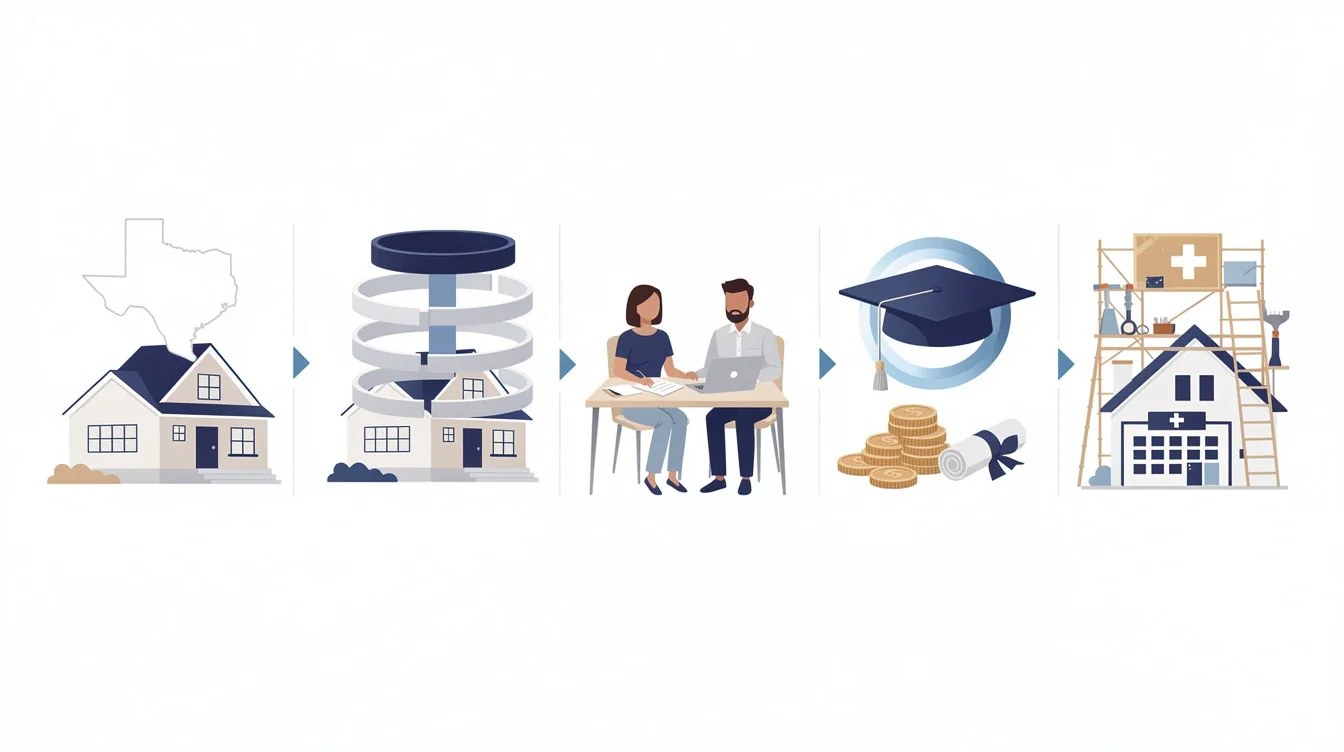
Here’s where things get a little more “Texas.” Our state has some unique laws when it comes to borrowing against your home’s equity, all designed to protect homeowners. These rules are especially important to understand before you start the process.
A few key Texas home equity loan rules:
- You can’t borrow more than 80% of your home’s appraised value, minus your existing mortgage balance. For example, if your home is worth $400,000 and you still owe $250,000, the most you could borrow would be $70,000 ($400,000 x 80% = $320,000; $320,000 – $250,000 = $70,000).
- Home equity loans in Texas must be secured only by your primary residence—not vacation homes or investment properties.
- There’s a rule called the “once-a-year” provision, meaning you can only take out one home equity loan or HELOC per year on your property.
- You can’t use a home equity loan to pay off property taxes that are delinquent.
These may sound strict, but they’re meant to keep homeowners from getting in over their heads. Texas really puts homeowners’ interests first, which is something we deeply respect and support.
Pro tip: Because Texas home equity laws are unique, it’s extra important to work with a lender who knows their stuff. Casey Sullivan Mortgage is Texas-based, and we’ve done this dance many times—we’ll guide you through every twist and turn.
Reasons Texans Use Home Equity
Let’s get real for a sec—there are dozens of reasons why someone might tap into their home’s equity. Here are just a few scenarios we see all the time:
- Home Improvements: Upgrades like kitchen remodels, new roofs, or energy-efficient windows can increase your home’s value and make life more comfortable.
- Education Expenses: College tuition and fees are no joke, and home equity can be a smart way to cover big education bills at a lower interest rate than most private student loans.
- Debt Consolidation: If you’re juggling high-interest credit cards or personal loans, a home equity loan or cash-out refi could help you pay them off and simplify your finances.
- Medical Bills: Health emergencies are stressful enough—using home equity can help you handle big medical costs without draining your savings.
- Starting a Business: Many small business owners use home equity to fund their dream, since it often comes with a lower interest rate than a business loan.
Just remember, no matter the reason, you’re putting your home on the line. That’s why it’s so important to work with a team that cares about your long-term security and well-being.
Pro tip: Not all home improvements pay off equally! Projects like kitchen and bathroom remodels often have the highest return on investment if you plan to sell down the road.
The Application Process: What To Expect
If you’ve never tapped your home equity before, you might be wondering what the process actually looks like. Don’t worry—it’s not as scary as it sounds, especially when you’ve got a supportive team by your side.
Here’s a rough idea of how things go:
First, you’ll talk with a mortgage advisor (that’s us!) to discuss your goals and which type of loan or line of credit makes the most sense. We’ll help you figure out how much you can safely borrow and what your new monthly payments will look like. The next step is a formal application, where you’ll provide documents like pay stubs, tax returns, and info about your home.
Most home equity products require a property appraisal to determine your home’s current value. Once that’s done and all your paperwork’s in order, your lender will process your application, lock in your interest rate, and prepare the loan documents. In Texas, there’s a mandatory waiting period before you can access your funds—usually about 12 days after you apply and another 3 days after closing.
The whole process typically takes 3-5 weeks, but our job is to keep things moving and keep you in the loop at every step.
Pro tip: Start gathering your financial documents early! The smoother your paperwork, the faster you’ll get to the finish line (and the cash in your account).
Smart Borrowing: Risks and Rewards
It’s exciting to think about turning your home’s value into cash, but let’s talk about the flip side, too. Every loan or line of credit comes with risks, and it’s important to be mindful.
The biggest thing to remember is that your home is the collateral. If you can’t keep up with payments, you could face foreclosure. That’s why you should only borrow what you truly need—and make sure the new monthly payment fits comfortably into your budget. It’s also a good idea to have a backup plan, just in case life throws you a curveball.
On the plus side, home equity loans and HELOCs usually offer much lower interest rates than credit cards or unsecured personal loans. That means you could save big on interest over time, especially if you’re consolidating debt or paying for a major purchase.
At Casey Sullivan Mortgage, our goal isn’t just to help you get a loan—it’s to help you make the right choice for your future. We’ll walk you through all the numbers, answer every question, and make sure you’re 100% comfortable before you sign anything.
Pro tip: Don’t be shy about asking questions. We’re here to educate and empower you, not just close deals.
Conclusion
Using your Texas home equity for major expenses can be a game-changer, whether you’re planning a renovation, paying for college, or consolidating debt. With the right approach—and the right lending partner—you can unlock the value you’ve built up in your home safely and confidently.
At Casey Sullivan Mortgage, we’re all about personal service, clear communication, and making sure you feel supported from start to finish. If you’re curious about your options or just want to talk things through, give us a shout. We’d love to help you turn your home equity into your next big opportunity—Texas style.