In a market where scalable cash flow beats personal income, DSCR loans are helping investors close more doors with less friction. Within the broader universe of commercial loans for real estate investors, this product underwrites the property first, you second, which can accelerate growth for those who know their numbers.
Here we will compare DSCR financing head to head with other options. You will learn how lenders calculate DSCR, typical thresholds, and how those rules affect maximum leverage. We will examine rates, fees, terms, prepayment structures, reserves, and documentation, so you can forecast true cost of capital. We will also cover eligibility by property type, from long term rentals to small multifamily and short term rentals, along with recourse versus nonrecourse features and portfolio strategies. By the end, you will know when a DSCR loan is the right fit, when a bank, agency, SBA, or bridge loan may deliver better outcomes, and which criteria matter most when comparing offers. Use this guide to select financing that aligns with your strategy, timeline, and risk tolerance.
Criteria for Comparing Real Estate Loans
Rate impact on ROI
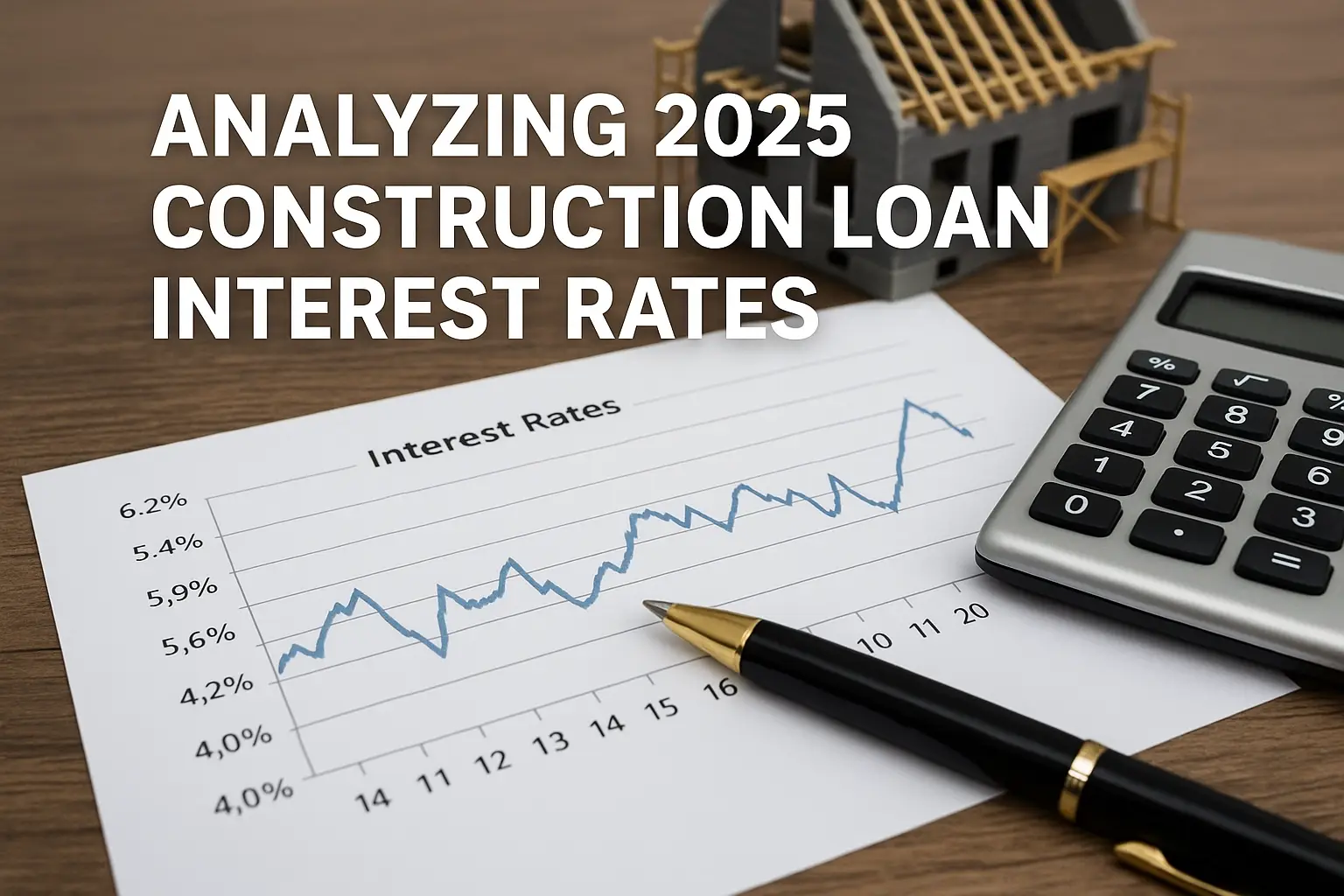
For commercial loans for real estate investors, rate selection is the quickest lever to improve cash flow and returns. In 2025, typical commercial-rate ranges span roughly 5.3 percent to 15 percent depending on asset class, leverage, and structure, as noted in this overview of 2025 commercial loan rate ranges. A 1 percentage point difference on a 400,000 dollar loan equals about 4,000 dollars per year in interest, roughly 333 dollars per month. That swing can move a deal from a 6 percent to a 7 percent cash-on-cash return at the same NOI. DSCR products often price slightly higher than full-documentation loans, but the speed and certainty of execution can outweigh a modest premium in competitive Texas markets.
Loan terms and long-term planning
Term structure should match your business plan and lease profile. Fixed rates reduce payment risk, which is helpful when leases extend five years or more; adjustable rates can fit shorter hold periods or value-add plans if you budget for potential resets. Longer amortization, 25 to 30 years, increases monthly cash flow but raises lifetime interest cost; shorter amortization builds equity faster and can boost refinance optionality. Evaluate prepayment costs carefully, since step-down penalties or yield maintenance can limit an early sale or cash-out refi. In Texas, pairing construction financing with a DSCR takeout can lock a smoother exit when rents stabilize and the DSCR threshold is met.
Qualification and portfolio scaling with DSCR
DSCR underwriting centers on property income rather than personal tax returns, which streamlines qualification for self-employed investors and those with multiple entities. Many programs target a DSCR of 1.00 to 1.25, calculated as NOI divided by annual debt service, and can close in as little as 15 to 21 days when documentation is organized. DSCR loans commonly allow multiple properties without the hard cap counts seen in some conventional channels. That makes rapid acquisitions, for example three single-family rentals in Southlake over one quarter, more feasible. Casey Sullivan Mortgage helps investors align DSCR sizing to realistic rent rolls, minimizing surprises at closing.
Texas-specific benefits of DSCR
Texas rent growth and demand support DSCR strategies, with strong in-migration and above-average yields that aid coverage ratios. Investors can reference market primers on DSCR loans in Texas for rental investors when stress testing rents and expenses. The multifamily sector is stabilizing, completions have moderated and absorption is steady, which supports underwriting consistency. Office spreads have tightened in 2025, signaling lender optimism, while the energy sector continues to underpin local economies. For clients in Southlake, Keller, and across Texas, Casey Sullivan Mortgage leverages DSCR and construction options to balance speed, flexibility, and long-term planning with low-rate execution and minimal hassle.
Key Benefits of DSCR Loans for Texas Investors
Lower cost than hard money
Compared with hard money, DSCR loans lower borrowing cost materially. In 2025, many hard money notes still price in the low double digits, often 10 to 12 percent. Recent Texas DSCR quotes commonly fall in the 7.15 to 8.50 percent range, dependent on DSCR, LTV, and property risk, which can add 200 to 300 basis points of yield back to your deal in year one. See typical ranges outlined here: Texas DSCR rate guide. For hold periods beyond six months, DSCR usually beats hard money on total financing cost, while preserving competitive timelines.
Longer terms and planning stability
DSCR loans typically offer 20 to 30 year amortizations, which reduce monthly payments and smooth cash flow versus 6 to 24 month bridge notes. Fixed periods help investors budget capex and leasing plans without rate shock. Guidance for Texas multifamily operators points to 30 year schedules as a baseline for value-add holds, giving renovations time to season rents and boost NOI, see the Texas value-add investor’s guide. With 2025 commercial rate trends in flux, longer terms create a safer planning horizon.
Scalable for active portfolios
DSCR underwriting centers on property income, not personal W-2s or tax returns, which lets frequent buyers scale. Programs commonly target a DSCR of about 1.10 to 1.25 and LTVs near 75 to 80 percent. Some Texas options can close in roughly 15 to 21 days, keeping offers competitive in tight markets. Overview here: How DSCR qualification works in Texas.
Case study, Fort Worth duplex
A Fort Worth duplex listed at 285,000 generated 3,200 in monthly rent. With an 80 percent LTV DSCR loan at 7.25 percent and 30 year amortization, principal and interest were about 1,551. Adding 700 for taxes and insurance, PITI was 2,251 and the DSCR measured roughly 1.42. The loan closed in 15 days, beating a hard money bid that required an extension. Cash flow was positive on day one, and the fixed payment supported a staggered renovation plan.
Maximizing Southlake rentals
Southlake benefits from strong household incomes and constrained supply. With Texas multifamily stabilizing and new completions down 18 percent year over year, absorption near 506,000 units supports steady rents. Pair DSCR financing with conservative stress tests, target at least 1.25 DSCR on pro forma rents and keep six months of reserves. Many investors in Southlake use construction or rehab financing, then refinance into DSCR for a long term exit. Casey Sullivan Mortgage can help structure that path so you capture demand without unnecessary friction.
Analyzing DSCR Loans vs. Other Loan Options
DSCR vs. conventional terms and structure
For commercial loans for real estate investors, DSCR underwriting centers on property cash flow, commonly targeted at 1.0 to 1.25. Typical down payments run 20 to 25 percent, and many programs do not cap the number of financed properties. Timelines are streamlined, with 15 to 21 day closings in Texas versus 30 to 45 days for full documentation. Conventional investment mortgages lean on personal income, DTI, and credit, and often limit total financed properties near ten. See the side by side details in DSCR loan vs traditional mortgage and DSCR loan vs conventional.
Scaling potential, DSCR vs. hard money
For buy and hold strategies, DSCR loans offer 30 year amortization, rate stability, and the option to cash out for future acquisitions. Hard money fits short bridges or flips, yet higher carrying costs over 6 to 24 months can compress cash flow. A Keller investor can buy a duplex with DSCR, season leases, then execute a cash out DSCR to fund the next door. DSCR also serves as a construction exit, turning interest only builds into permanent financing once rents stabilize.
Eligibility and pricing in today’s market
Eligibility is straightforward, many DSCR lenders accept 620 to 660 credit, and ignore DTI since cash flow rules. Conventional programs typically prefer 680 plus credit and DTI at or below 43 percent. In 2025, DSCR rates often sit 0.25 to 1.5 percentage points above comparable conventional, clustering in the mid 6s to mid 7s for strong files. Improving market tone, including office loan spreads near 203.75 basis points, supports gradual pricing normalization.
Why DSCR can be a Texas edge
Texas conditions favor income based qualification. The multifamily sector has been stabilizing, with absorption around 506,000 units and new completions down about 18 percent, which underpins rent and DSCR. In Southlake and nearby suburbs, faster DSCR closings can win competitive offers without relying on W 2s or tax returns. Casey Sullivan Mortgage tailors DSCR, conventional, VA, FHA, and construction to DSCR plans across North Texas, helping investors choose the structure that best scales holdings.
Market Trends for Commercial Loans in Texas
The 2025 Texas CRE lending backdrop
Lending activity has reaccelerated in 2025, with the CBRE Lending Momentum Index up 13 percent quarter over quarter and 90 percent year over year, signaling a healthier pipeline for closings and refinances across property types Commercial real estate lending activity increases in Q1 2025. Banks in the Eleventh District kept profits steady as loan growth concentrated in real estate, while construction and land development lending fell 7.2 percent in 2024, a sign that new supply may taper in coming years Eleventh District loan growth softens. Stress has not vanished, with more than 710 million dollars in distressed CRE loans slated for September 2025 foreclosure auctions across major Texas metros, a reminder to maintain conservative underwriting CRE foreclosures climb in Texas. At the same time, rate volatility has cooled, and financing markets have reopened, which improves pricing discovery and execution certainty. For commercial loans for real estate investors, this means clearer underwriting boxes, steadier term sheets, and faster credit decisions. Casey Sullivan Mortgage uses this stability to pre-qualify Texas investors efficiently and align debt structures with the business plan.
DSCR versus bank balance sheet and bridge
With multifamily leading 2025 activity and absorption stabilizing around 506,000 units nationally while new completions fell about 18 percent, DSCR loans have gained share as a practical choice for stabilized or near-stabilized assets. Compared with bank balance sheet loans, DSCR financing emphasizes property cash flow rather than tax returns, often enabling faster closings in roughly 15 to 21 days and simpler documentation. Pros include scalable qualification across portfolios, competitive fixed or adjustable terms, and streamlined processing; cons can include prepayment structures and slightly higher coupons than the very best bank pricing in select cases. Relative to bridge, DSCR can lower carry cost once assets are stable, while bridge remains useful for heavy value add or lease-up where reserves and future funding are needed. Example: an investor in Southlake acquiring a 12 unit property can size to a 1.15 to 1.25 coverage ratio, then refinance or expand as rents season. Casey Sullivan Mortgage coordinates DSCR, construction, and takeout planning so investors avoid debt mismatches.
Spreads, population growth, and actionable moves
Spreads are a key swing factor for loan attractiveness; office CRE spreads touched roughly 203.75 basis points at 2025 lows, and broader mortgage spreads tightened, signaling lender optimism and improving proceeds. Texas population growth continues to fuel rental demand, with more than 100,000 multifamily units breaking ground in 2025, supporting stabilized cash flows even where vacancies remain elevated. Action steps: monitor weekly spread moves and rate lock when deals pencil at target DSCR, pair construction financing with a pre arranged DSCR takeout, and underwrite exit cap rates 25 to 50 basis points above current prints for resiliency. In markets like Keller, Dallas Fort Worth, and Austin, these moves can turn small spread changes into meaningful cash on cash improvements. A Texas focused partner can benchmark DSCR, bank, and bridge quotes side by side, then structure the lowest friction path to closing. Casey Sullivan Mortgage delivers that local execution with personalized guidance statewide.
Tailored Recommendations for Real Estate Investors
Choosing the right DSCR loan provider
For commercial loans for real estate investors, start with a side by side comparison of rate, fees, DSCR minimums, closing speed, and prepayment terms. In Texas, competitive pricing and local underwriting can shorten timelines, and some programs avoid prepayment penalties, which helps active investors. DSCR loans can close in roughly 15 to 21 days, so verify average clear-to-close time during lender selection. Review transparency on total cost of capital, including lender credits and any interest rate add-ons for LLC vesting or short-term rental use. Use independent resources on how to shop DSCR lenders and compare terms to structure a fair apples-to-apples review how to shop DSCR lenders and compare terms.
Tailoring your strategy with Casey Sullivan Mortgage
Casey Sullivan Mortgage aligns DSCR structures with your plan, from single-family rentals to multifamily, and pairs construction financing with a DSCR exit when appropriate. Investors in Southlake and Keller often benefit from property-level underwriting that prioritizes rent strength and realistic expenses, keeping qualification simple and hassle light. For example, a Keller duplex with projected monthly rent of 3,600 and PITIA of 2,850 delivers a DSCR of 1.26, typically supporting favorable pricing with minimal documentation. The team can model rate buydowns versus lender credits to optimize cash-on-cash at closing while preserving DSCR thresholds. Pre-approvals centered on rent comps and taxes help you write stronger offers in competitive submarkets.
Match loan features to your plan
Compare fixed versus adjustable options, interest-only periods, and step-down versus soft prepay. Long-term holds, seven to ten years, often fit a 30-year fixed with a modest step-down prepay. Value-add plays may benefit from a 5, 7, or 10 year ARM with 24 months interest-only, limited prepay, and a planned refinance. Target a DSCR buffer of 1.20 to 1.30 to absorb vacancies and taxes. With Texas multifamily stabilizing, absorption near 506,000 units and new completions down 18 percent, prudent leverage can capture upside while containing risk.
Optimize terms and manage relationships
Request term sheets that itemize rate, points, underwriting fees, reserves, escrows, and prepayment language. Negotiate rate locks with float-downs, repair escrows, and reserve waivers tied to DSCR performance. Review covenants for cash management triggers and, for ARMs, confirm index, margin, caps, and lookback. Keep rent rolls, leases, and insurance quotes current to prevent closing delays. For a refresher on qualification, documentation, and common trade-offs, see this guide to DSCR loan fundamentals and documentation tips DSCR loan fundamentals and documentation tips.
Conclusion and Key Takeaways
Start by defining your objective, then select among commercial loans for real estate investors that align. If your aim is rapid portfolio growth, DSCR financing often wins on flexibility, since qualification pivots on property cash flow, not tax returns, and closings can happen in about 15 to 21 days. Conventional loans may offer slightly lower rates for seasoned borrowers, but stricter documentation can slow acquisitions. Construction loans fit ground‑up or heavy rehab plans, especially when paired with a DSCR takeout, but expect milestone draws and tighter oversight. Compare DSCR minimums, interest‑only periods, prepayment options, and local underwriting, which can improve certainty of close.
Partnering with Casey Sullivan Mortgage streamlines the process for Texas investors, covering FHA, VA, DSCR, and construction options with light paperwork and competitive rates. For example, a Southlake or Keller duplex projected at a 1.20 DSCR can be financed with an interest‑only year to boost cash flow, then refinanced as rents season. Stay market aware, since 2025 trends matter. Multifamily absorption sits near 506,000 units with new completions down about 18 percent, and office loan spreads near 203.75 basis points signal rising lender confidence. Use these tailwinds to time rate locks and structure loans to maximize rental income and long‑term growth.